 CAMEROON NATIONAL
SHIPPERS' COUNCIL
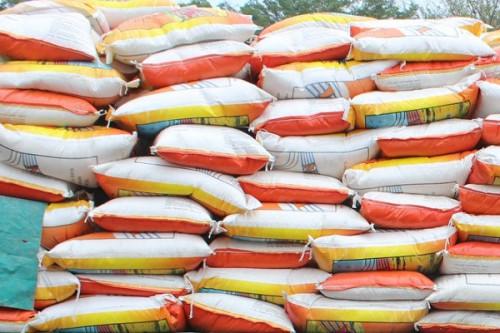
CAMEROON NATIONALOperators should urgently import 150,000 tons of rice to supply the local market in the last quarter of 2023, Minister of Commerce Luc Magloire Atangana instructed at a consultation meeting held in Yaoundé last Tuesday. According to the government official, the aim is to guarantee supplies in the local market during the festive season, which is usually marked by high rice consumption.
The instruction comes at a time when the government is promoting import-substitution, which consists of reducing massive imports by developing local production and processing. The import-substitution plan notably targets key sectors like agriculture, with 25% of the national territory being arable and fertile.
On May 16, 2023, the Ministry of Agriculture launched the implementation of a CFAF385 billion strategy to develop the rice sector. This strategy aims to boost local rice production to 750,000 tons, yearly, by 2030, thereby eliminating imports.
"Far from just producing rice, the aim is to make high-quality rice available on the market at competitive prices. This means modernizing the means of production through agricultural mechanization, reorganizing the players in the sector, but also involving the private sector upstream and downstream", said Minister of Agriculture, Gabriel Mbairobe, when the strategy was validated.
Re-exportation
This is not the first time Cameroon is adopting a strategy to reduce its massive rice imports. In the aftermath of the hunger riots in March 2008, the Ministry of Agriculture announced the imminent implementation of a strategy to boost local production. The fate of the CFAF600 billion strategy is still unknown up to now even when a new strategy is announced.
In the meantime, rice is still one of the main import products that affect Cameroon’s continuously negative trade balance. According to the national institute for Statistics (INS), Cameroon imported 652,565 tons of rice in the first 10 months of 2022, spending CFAF162.5 billion. Over the said period, rice accounted for 4.6% of overall imports. In 2021, the country spent CFAF207.9 billion on rice imports, representing 5.4% of the overall value of its imports.
From 2008 (after the hunger riots) to late 2015, rice imports have been exempt from taxes. Starting from 2016, it was subject to the 5% minimum tax. Therefore, part of the rice imported in Cameroon usually feeds contraband networks that smuggle them into Nigeria, where the food product is overtaxed to encourage local production. They also re-export the products to Gabon and Equatorial Guinea because of the attractive prices offered for rice in those markets. According to the INS, CFAF87 billion worth of rice was fraudulently reexported from Cameroon to neighboring countries in 2019.
Source: Business in Cameroon

Recent news
RELEASE
The General Manager of the Cameroon National Shippers’ Council (CNSC) hereby informs shippers and business persons that...
GREEN LIGHT PLANET CAMEROON DISCOVERS FACETS OF THE SAWA HERITAGE ON EXHIBITION AT THE DOUALA MARITIME MUSEUM
29 employees from the solar energy company took a journey into Cameroon’s maritime and cultural history on Friday 18...
CULTURAL IMMERSION: INTERNATIONAL MILITARY ADVISERS VISIT THE DOUALA MARITIME MUSEUM
On the sidelines of their training seminar, 37 officers from twenty countries explored Cameroon's maritime history on...